
Red 12, indicating a very early wrist watch. It is a common belief in the horology world that a red/blue 12 was used during the transition period (post WWI) from pocket to wrist watches, as a quick visual indicator as to where the 12 o'clock position was and thus the correct orientation of the watch so that the correct time may be read.
This particular watch I believe is so far the ealiest Rubaiyat (oldest Bulova) watch we have seen and the balance bridge uses the older style "Advance / Retreat" script rather that the "AF/RS" we typically see. Also the case serial number is the earliest and I'm suggesting that the second number in these American Standard Watch Case Company cases is indicative of the year of manufacture (the case not the movement). So in this case I'm dating this watch to 1917.
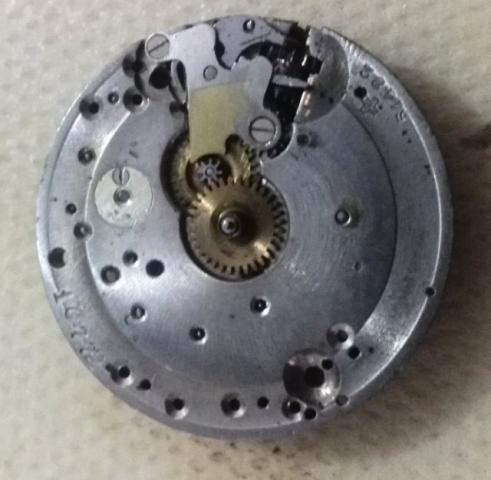
Movement is stamped Rubaiyat SWISS and double stamped 15 Jewels 3 ADJ (bridge and plate).
Movement plate is a Swiss patent FHF 51482 with a lignes (size) of either 9 or 9.25.
Note the center, third and forth wheels have been plated with red gold (gold + silver + copper)
Another aspect to note about these early Rubaiyats is the movment layout. A typical Rubaiyat/Bulova movement has the balance wheel positioned opposite the crown, however the very early versions had it at a right angle to the crown (ie the 3 or 9 o'clock poistion) as shown in this watch.


In reply to Let's all meet there this… by Geoff Baker
I'm going in JUNE! A baseball weekend with my son Andrew. Going to see the Mets on one day and the Yankees the next! It's a fathers day tradition, last time was Kansas City and St Louis. We've been doing it for years, but not every year. I'm the driver and beer buyer.