
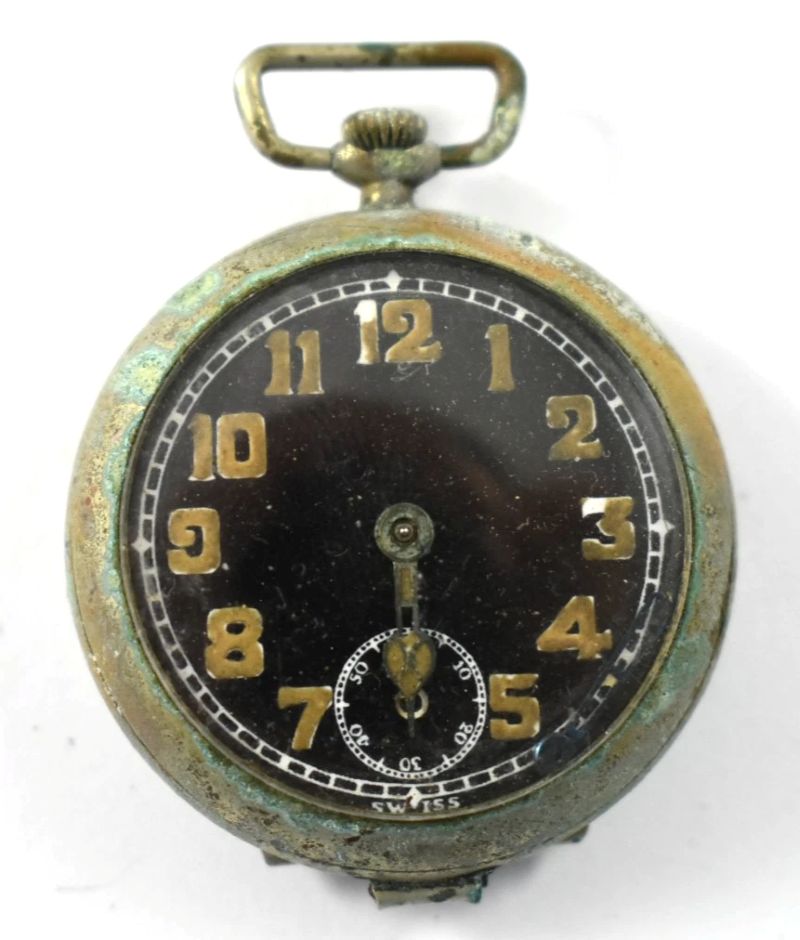
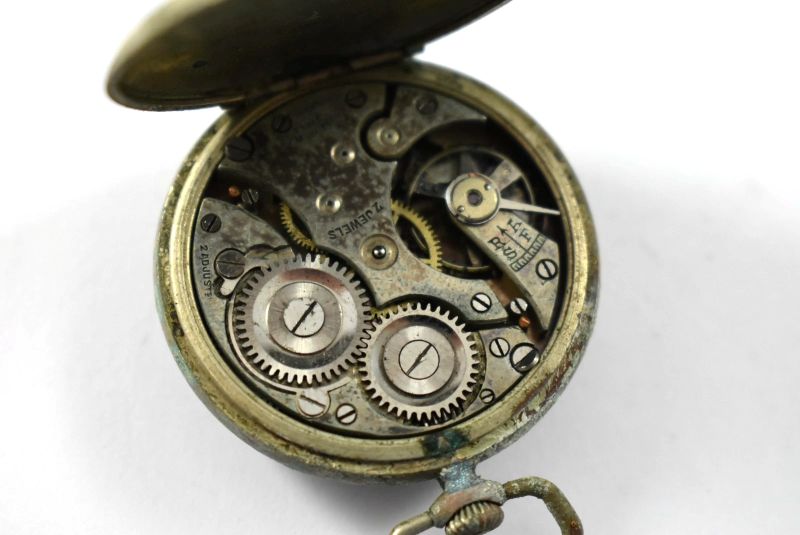
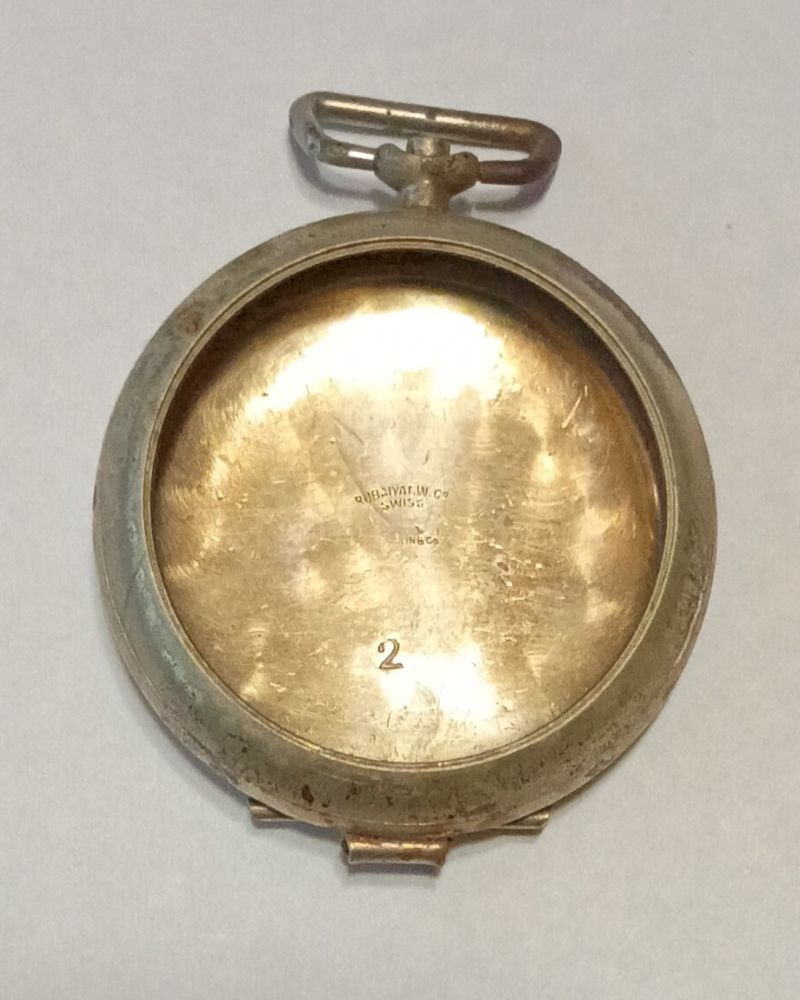
I do enjoy a good challenge. WWI era 1914–1918 'RUBAIYAT'. the production date of 1916 is an estimate only.
In reply to The yar is still the… by mybulova_admin
In reply to The yar is still the… by mybulova_admin

In reply to The yar is still the… by mybulova_admin
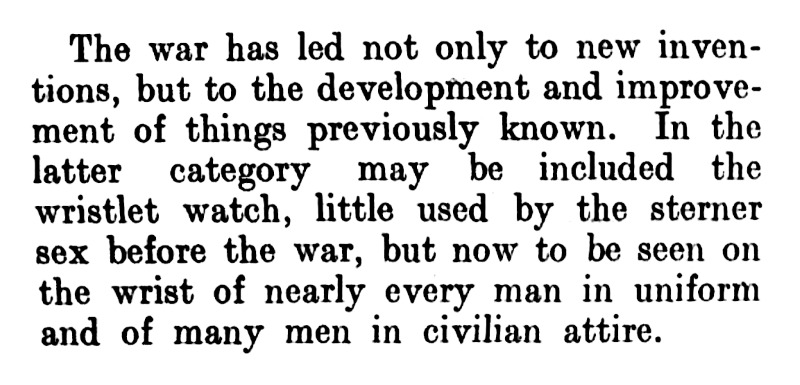
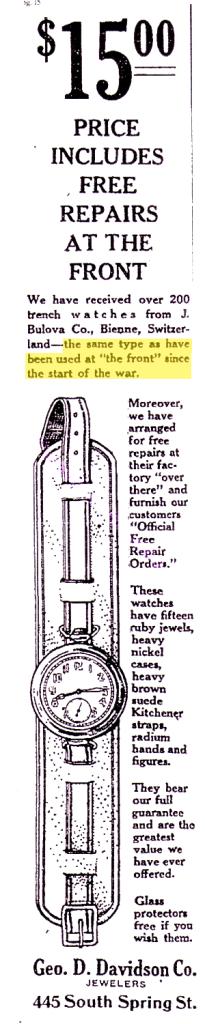
The ad is dated 1918 but states the watches had been in use since 1914 ( the start of WW1 ). It has also been reported that Joseph Bulova's watch factory in Bienne Switzerland began production in 1912.
It is My conclusion that these Gents 'wristlet watches' were being sold and distributed in Europe prior to their entry into the U.S. market in 1919.
In reply to The ad is dated 1918 but… by FifthAvenueRes…
Technically the advert says "the same type.....since the start of the war', so doesn't necessarily mean they were something produced by Bulova.
Burning question, which I think I know the answer to but will put it out there for discussion, is did Bulova fully manufacture these watches, movements and all or did they source all the parts (or even complete watches) from other manufactures? If they had factories in Bienne, does that mean they were indeed manufacturing the movements?
In reply to Technically the advert says … by mybulova_admin
Haha, you indeed know the answer Admin since we have direct contact to the Bulova people in charge. Their early “history” actually comes from a newspaper article given the Citizen people have no historical Bulova documents at all. They were all destroyed except for the board meeting minutes to which I have access. That newspaper article proved to be wrong (proved wrong by me). The Bulova company team is fully aware and fully acknowledges my research but their narrative on their website maintains the same (for the moment) given it has been perpetuated for so long that it is difficult to change.
In reply to Technically the advert says … by mybulova_admin
In reply to here We go with the old 'the… by FifthAvenueRes…
No, no, the ad is probably correct, no worries. The Bulova statements are wrong like the 1912 pocket watch movement production and the invention of standardized components and that they were the first in advertising the Bulova time in 1926 and that Lindbergh wore a Bulova watch, etc. The subject watch was purchased like the other one from Beguelin. Bulova in 1917-1920 was a purchasing activity. In 1920 they started production of watch cases. Their cousin Hugo produced the boxes. The movements continued to be purchased from workshops in Switzerland.
In reply to No, no, the ad is probably… by Alex
apologies in order to member Alex.
It does appear that Beguelin did indeed have a hand in the manufacture of this watch movement.
The excerpt below is from the webpages of David Boettcher:
' The company "Béguelin & Cie SA, Manufacture de Montres Damas et Tramelan Watch Co." is little recorded. The company was founded in Tramelan-dessous, apparently by Charles Edouard Béguelin and Berthold Meyrat. In 1950, Tramelan-dessous (lower Tramelan) merged with Tramelan-dessus (higher Tramelan) to form the current commune of Tramelan.
In “Swiss Timepiece Makers, 1775-1975” Kathleen H. Pritchard says the company was founded in 1903 although the company itself in adverts says 1902. However, the roots of the company stretch further back than this. Many people with the family name Béguelin were involved in watchmaking in Tramelan. In 1883, Charles Edouard Béguelin and Jules Abel Béguelin, both of Tramelan-Dessous, had founded a company in the town under the name Ch & A Béguelin for the manufacture of watches. Both partners were already in business as “fabricants d'horlogerie.” In 1888, Jules Abel left the partnership and the company continued under the name Chs Ed Béguelin. In May 1901, a watchmaking company in Tramelan-dessous under the name Charles Henri Béguelin was closed, and Edmond Béguelin and Arthur Béguelin founded Béguelin frères with the foundation date of 1 January 1901.
On 18 March 1905, Charles-Edouard Béguein and Reynold Chatelain, both from and residing in Trameian-dessous, set up a partnership under the business name Béguelin & Cie for the manufacture and finishing of ébauches. This partnership was dissolved on 16 May 1907 and the business taken over by a company under the same name, Béguelin & Cie, a limited partnership begun on 8 April 1907 by Charles-Edouard Béguelin and Berthold Meyrat, partners with unlimited liability, and Paul Droz with a liability of five thousand francs.
Trademarks used by Béguelin & Cie include the BTCo logo shown here, presumably for Béguelin Tramelan Co., ‘BEG’, and a fancy letter M. In later years the brand name ‘Damas’ was used prominently in advertising and on movements.'
Interestingly enough the company name was Béguelin & Cie which translates to Beguelin and others. Also of interest Droz appears again in relation to Beguelin, Droz can be associated to Joseph Bulova via the Maxim brand.
My question in the equation are who are 'the others' in Béguelin & Cie?
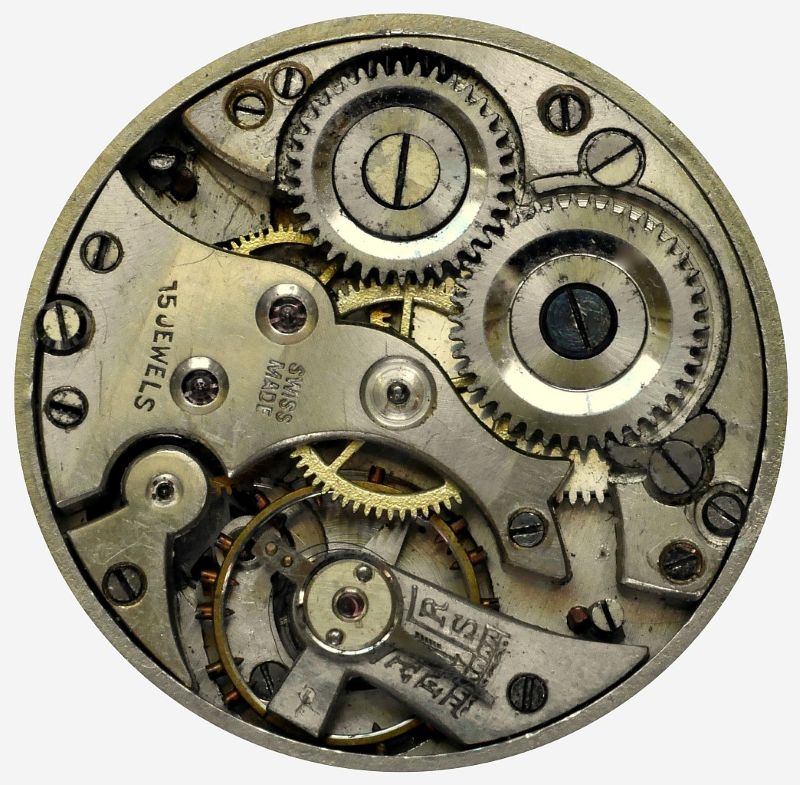
BTCo Military 15J