
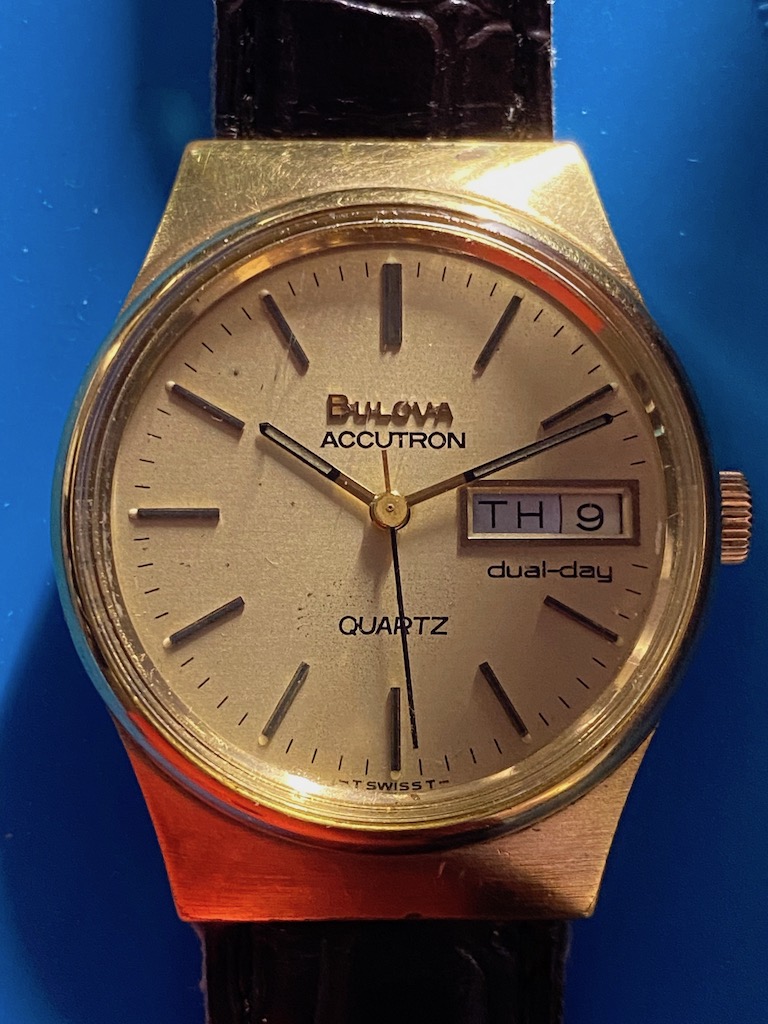
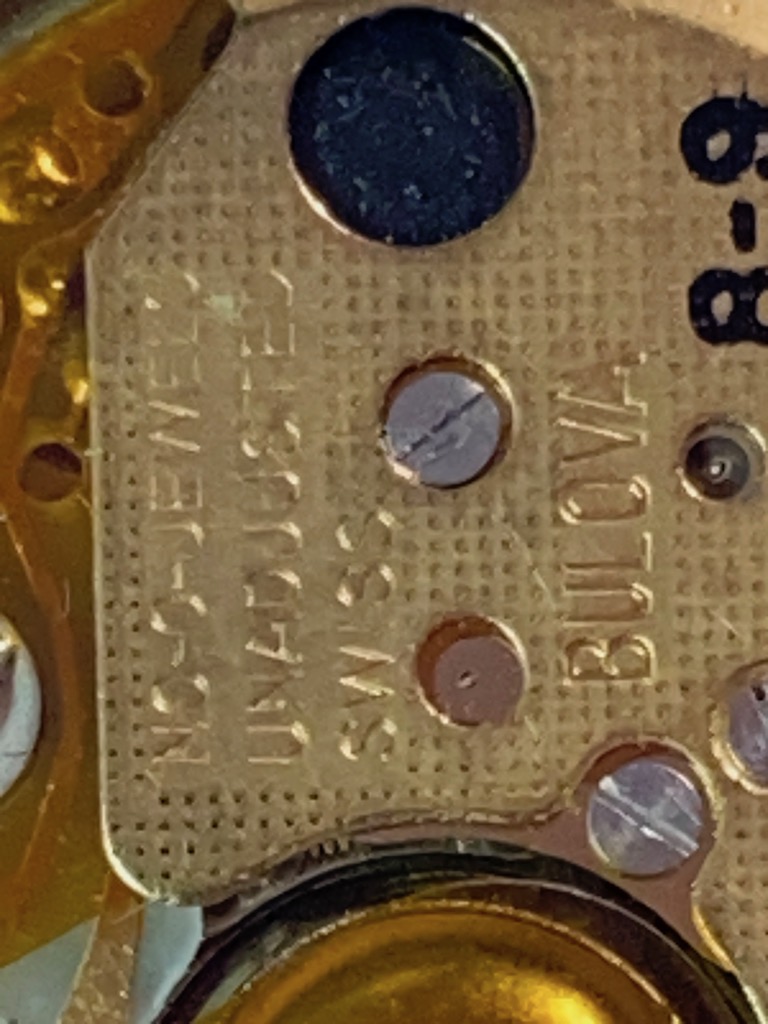
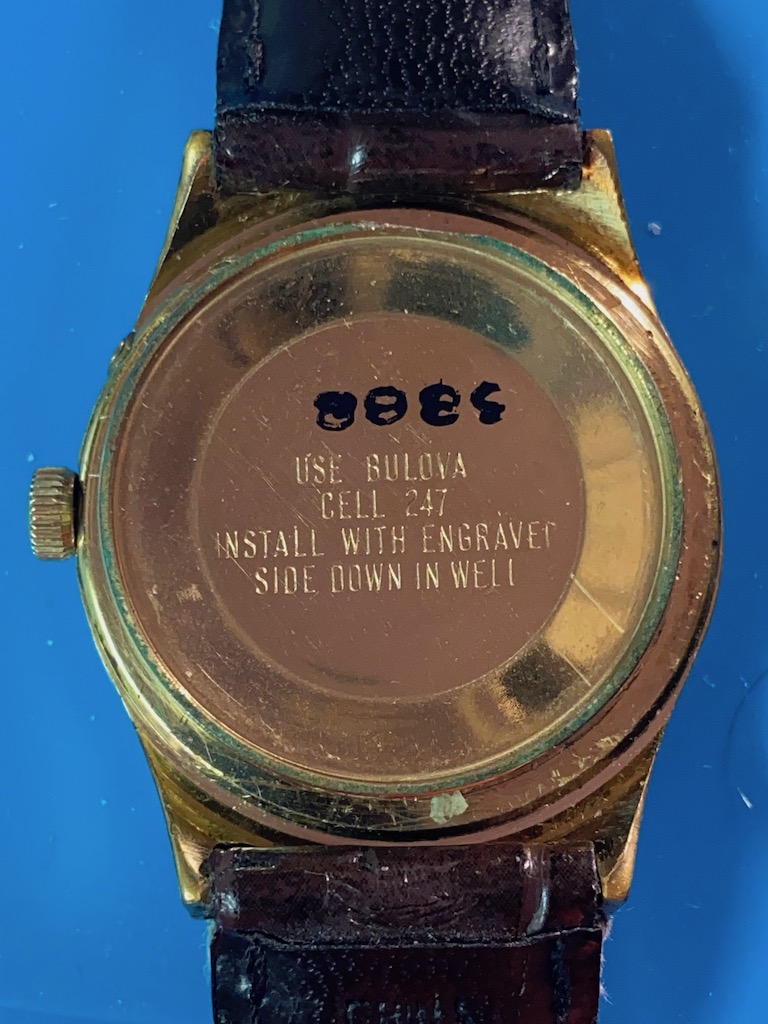
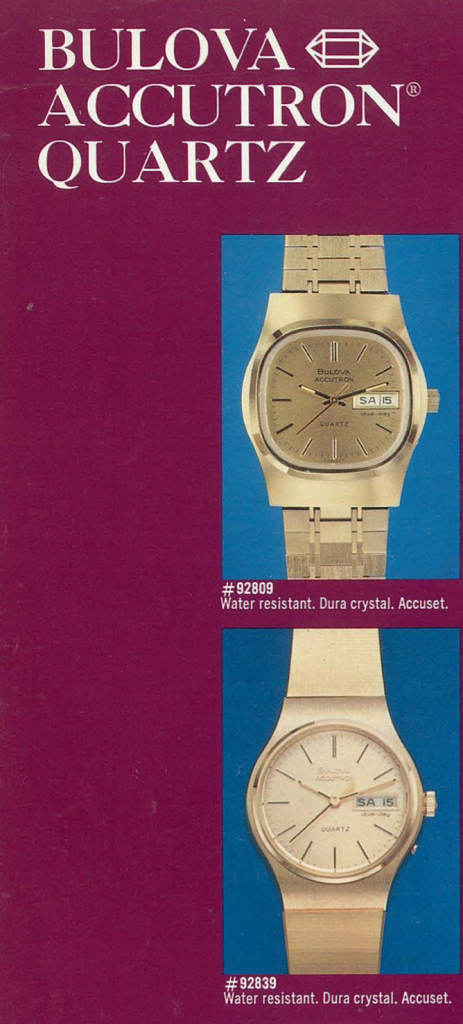
1979 Accutron Quartz Day-Date 10k GF case, with helpful NIST pushbutton hacker at 2:00.
NIST feature allowed owners of that period to hack a slow watch to sync with National Institute of Standards & Technology by depressing the pusher when the second hand is at 12:00, causing the hand to double time it until it synch'd with NIST. If it was 10 sec fast, depress the pusher anywhere else on the dial & the hand stops for 10 secs.
1979 Accutron Quartz Day-Date 10k GF case, with helpful Accuset pusher at 2:00.
TWO EXAMPLES…
3 secs fast: depress the pusher at 12:03, causing the secs hand to pause 3 secs to slow down to NIST time.
5 secs slow: depress the pusher at 11:55, causing the secs hand to double-time it to 12:05, to catch up to NIST time.
(There is no RC communication from the watch.)
Lovely matte gold dial face and polished gold baton indices.
Crystal has small scratch across 11:00 index.
Excellent vintage condition with patina to match a 44 year old timepiece.



In reply to Even though the Accuset… by stevetron

In reply to Any idea how it would 'sync… by mybulova_admin
In reply to Any idea how it would 'sync… by mybulova_admin
When you have the NIST site up, you coordinate with the pusher to correct any discrepancy in late or early seconds by:
3 secs fast: depress the pusher at 12:03, causing the secs hand to pause 3 secs to slow down to NIST time.
5 secs slow: depress the pusher at 11:55, causing the secs hand to double-time it to 12:05, to catch up to NIST time.
There is no RC communication from the watch (like a Casio, for instance.)