This one blew by me so fast on the 'Bay I didn't get a chance to grab it... Probably the third one I've seen in maybe 5 years. I missed another one a couple years back coming from Italy. This is of course, the Champagne ebauche Pendule style automatic known as the 'Bulova Champ'. We have discussed this watch elsewhere, but here for the benefit of the database is another good example. It is interesting to note that the serial numbers of the two now in the dB are very close. This one is 5258956, the other one is 5258933. The third one I have seen (in person) is also as close in serial. (10 numbers off) . If this watch belongs to a member, my apologies and we humbly ask your permission to keep the entry.


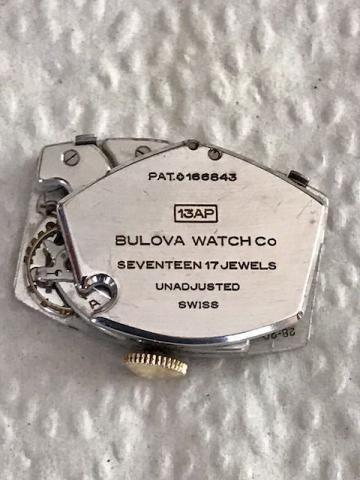


In reply to Wasn't this movement referred by Geoff Baker
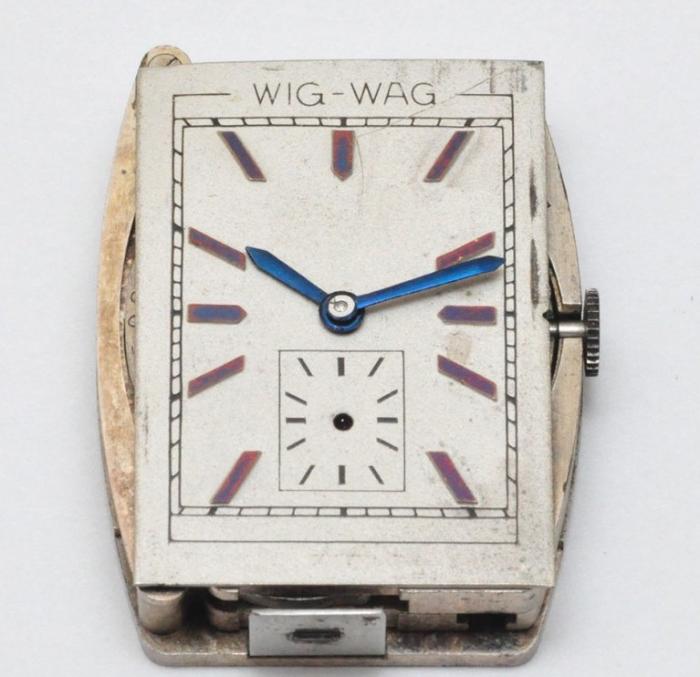
The 'Wig-Wag' is a different movt, called the Champagne 19-4. This one (28-20) is called a Pendule because the bumper system uses a pendulum style weight. This is similar to the very first winding systems designed and used in pocket watches of which Breguet is an excellent example. (1780)
This is the 'Wig-Wag':

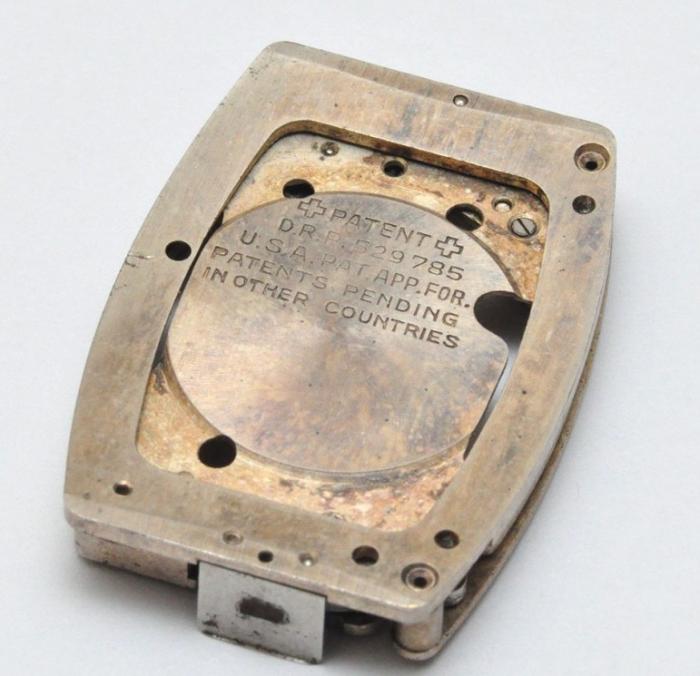


Hi All,
I've been enjoying this forum for years but never had anything to brag or ask about. But behold....I stumbled upon the Champ after years and years of exploring the web. And now I need some help.
Case number 5258655 - Movement number 1384950 - Marked also 28-20 asterisk square - I could not match the serial number to a date although one website said 1931 or 1941.
I'd appreciate some assistance as to the year of manufacture. I also searched and searched the web for any repair or disassembly instructions and had zero hopes of finding anything. And I found zero sources as one can imagine considering that this watch is almost non-existence. However, if there is anyone that has ever worked on this watch then any feedback would be appreciated. My watch was not working and issues indicated a fully wound mainspring as it worked some times when pressure was applied to the crown.
Now....how do you even get inside?
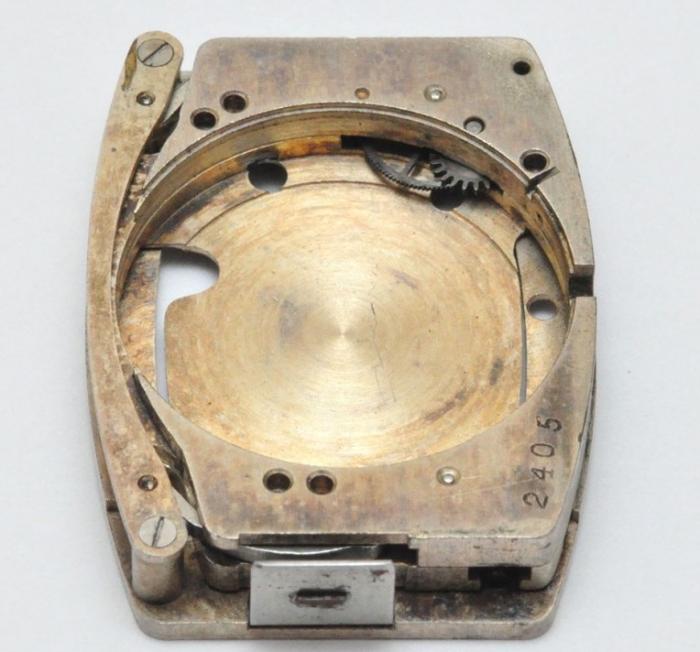
I patiently examined the watch for a few days to figure out and narrow down potential entry points. There were no secrets under the dial and unscrewing any accesible screws on the back also didn’t allow for any entry. I then followed the wear marks on the movement which showed the most amount of scratches and pry marks around the pendulum pivot. I decided to take my chances and after applying some tape pryed the pendulum upwards from two points using levers for removing hands. And presto...with a second away from a heart attack....the pendulum detached from the movement giving access to the base movement.
The build is pretty simple once you see it. The pendulum pivot is held in place with a tube that sits loose and is cut in half allowing for a click attachment, almost like a cannon pinion. Very simple and smart although not that straightforward. The winding mechanism advances by means of two ratchet levers held together in one springloaded assembly. After cleaning the watch started to run but stops when wound tight. So I need to inspect the barrel and mainspring much closer and see if a NOS replacement might do any better.
Something went wrong with the pictures but this forum doesn't appear to allow editing of previous posts.
Here's another try...
Unless it's a variation to the design, this particular dial appears to have been repainted around 1940-60's judging by the style, aging and patina. They clearly used another template for a Bulova from the same era with subdial at six.
The pendulum pivot locking tube is cut halfway through its length, not in half as I mentioned above :)
The last picture shows pendulum banking springs which are fairly simple to replace if missing.
Enjoy this exploration. Probably the first ever pictures on the internet on how to disassemble the Bulova Champ.
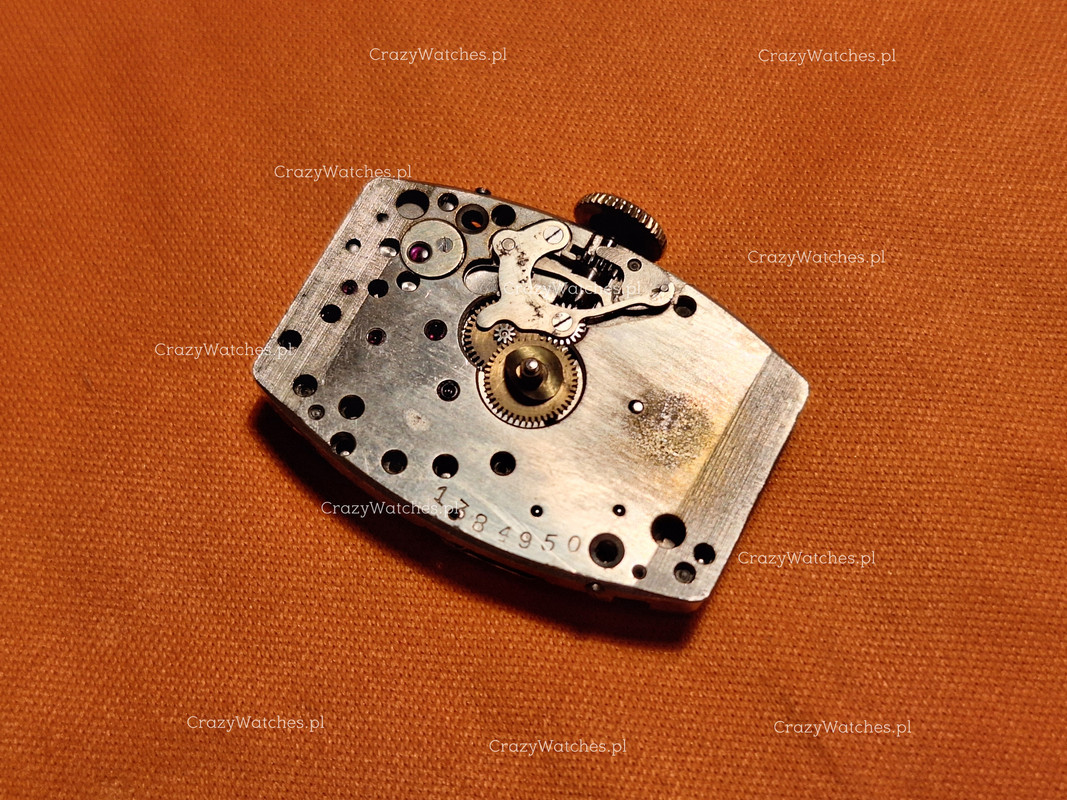
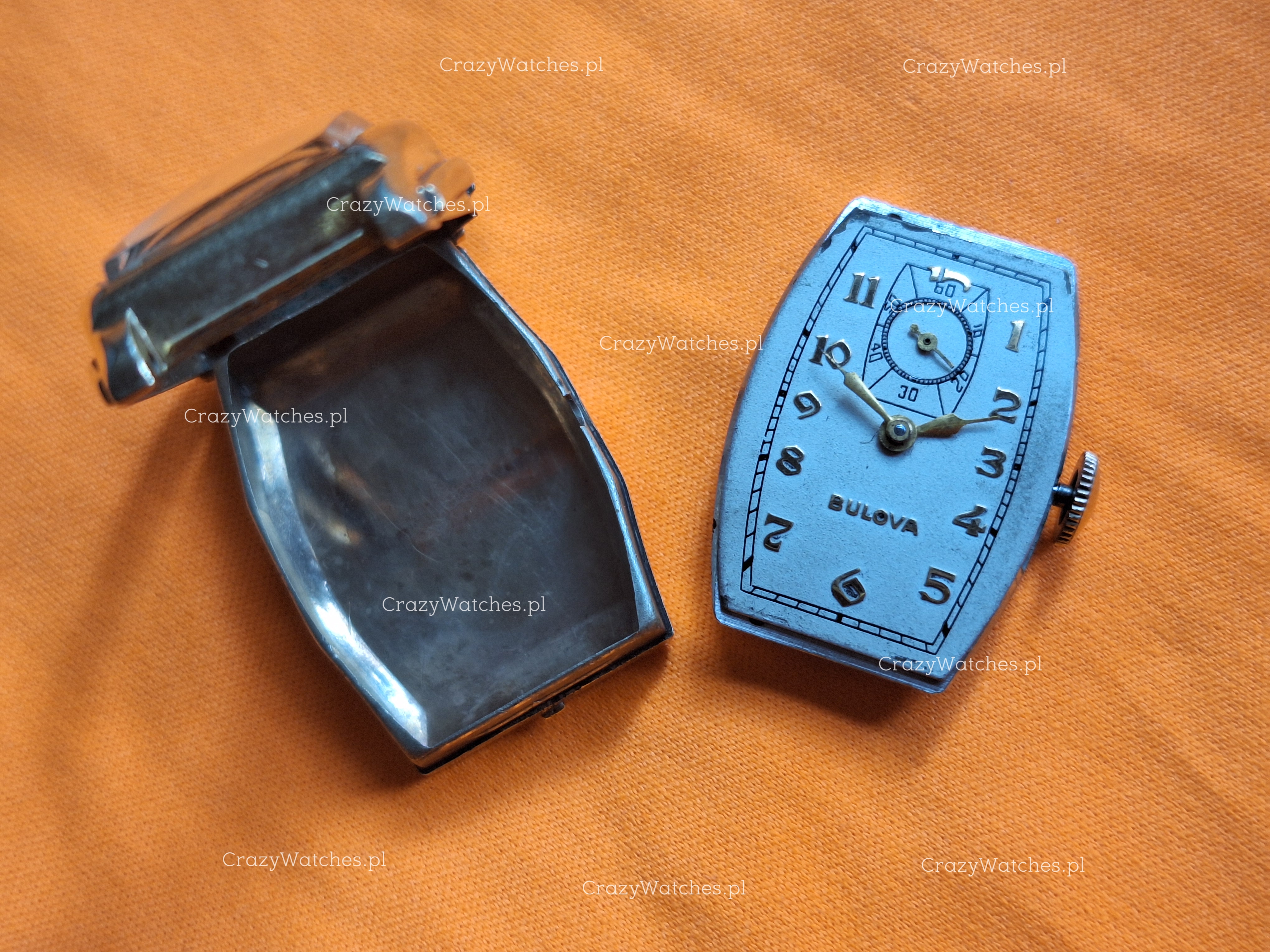
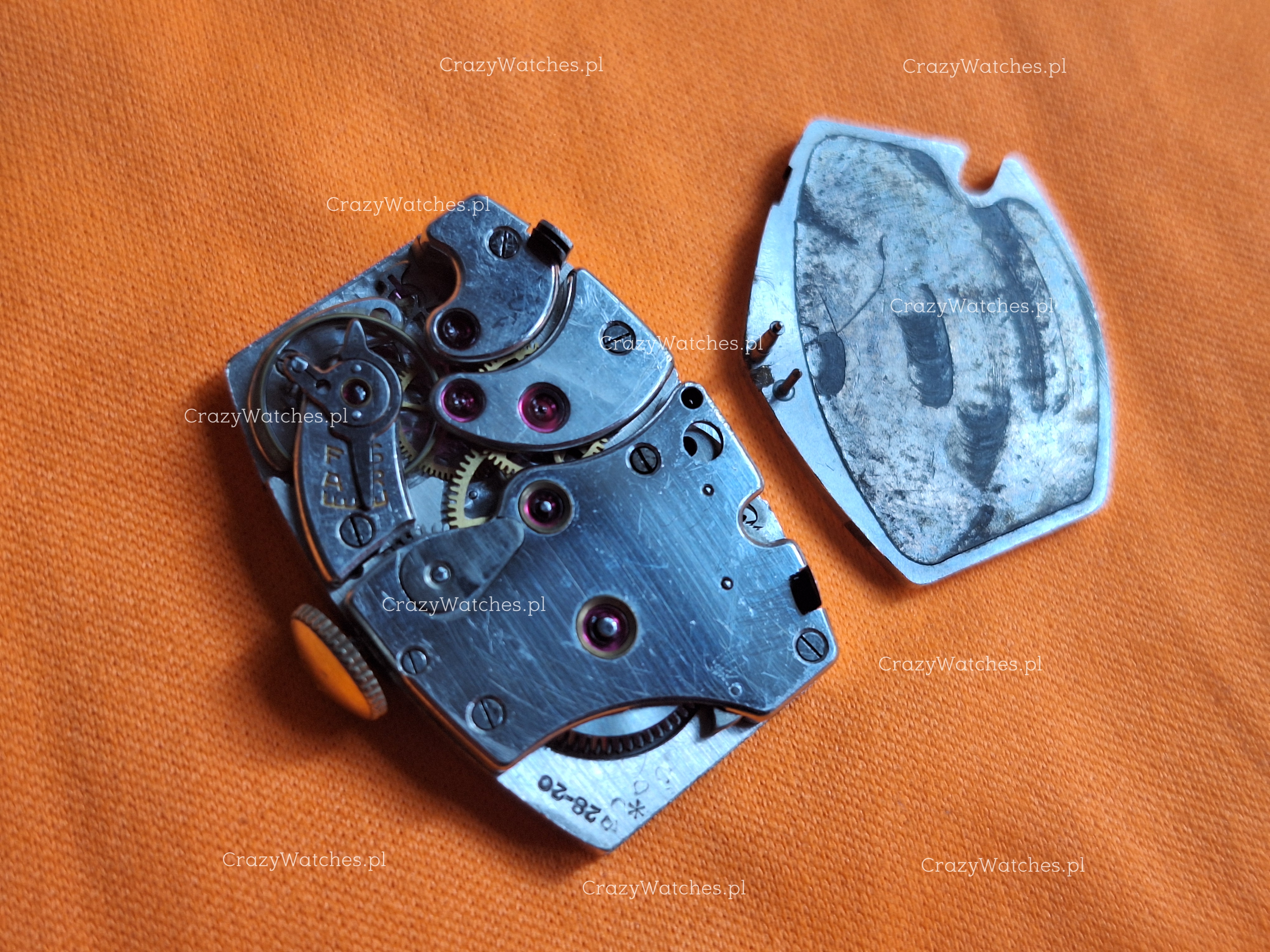
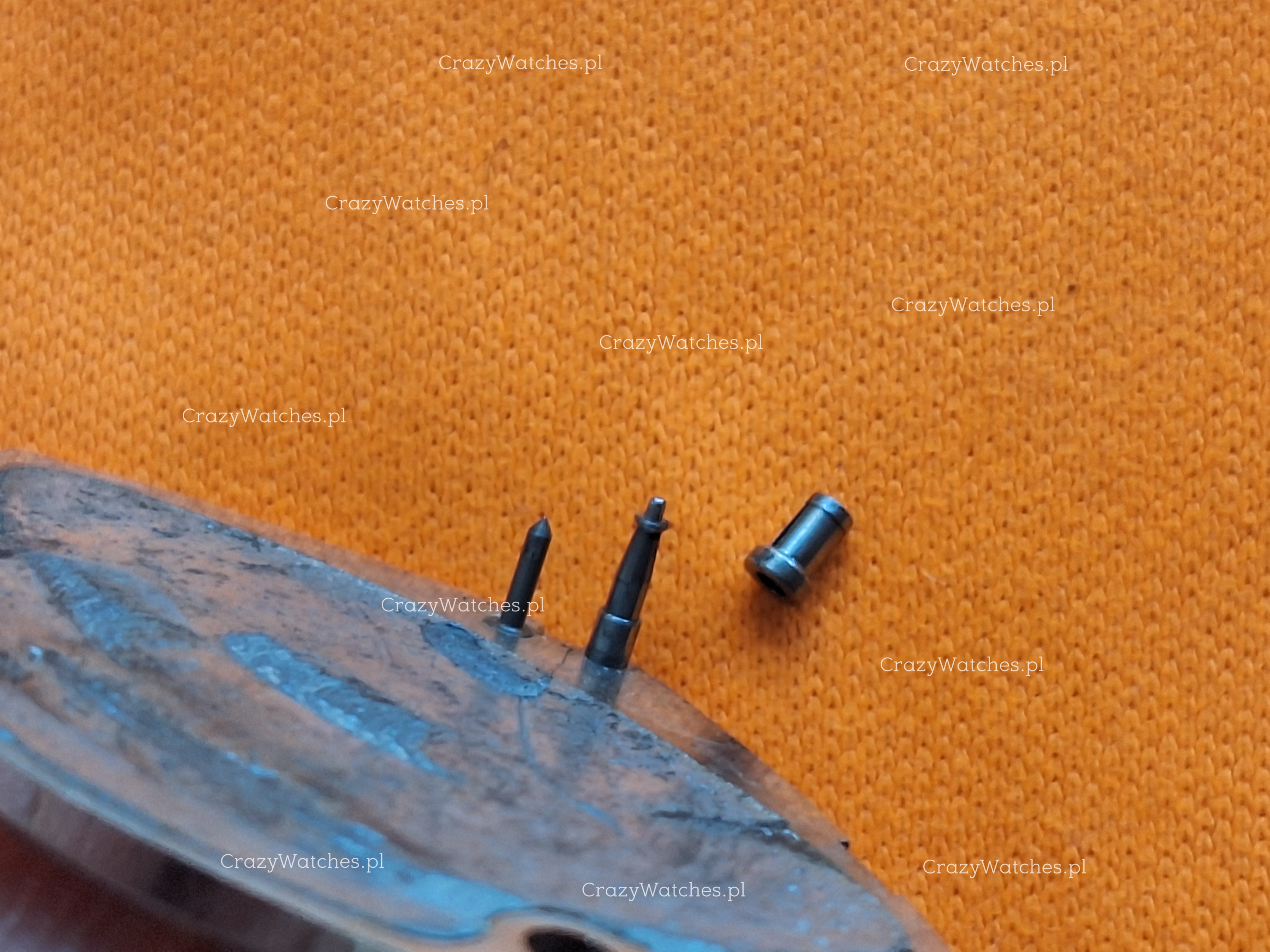
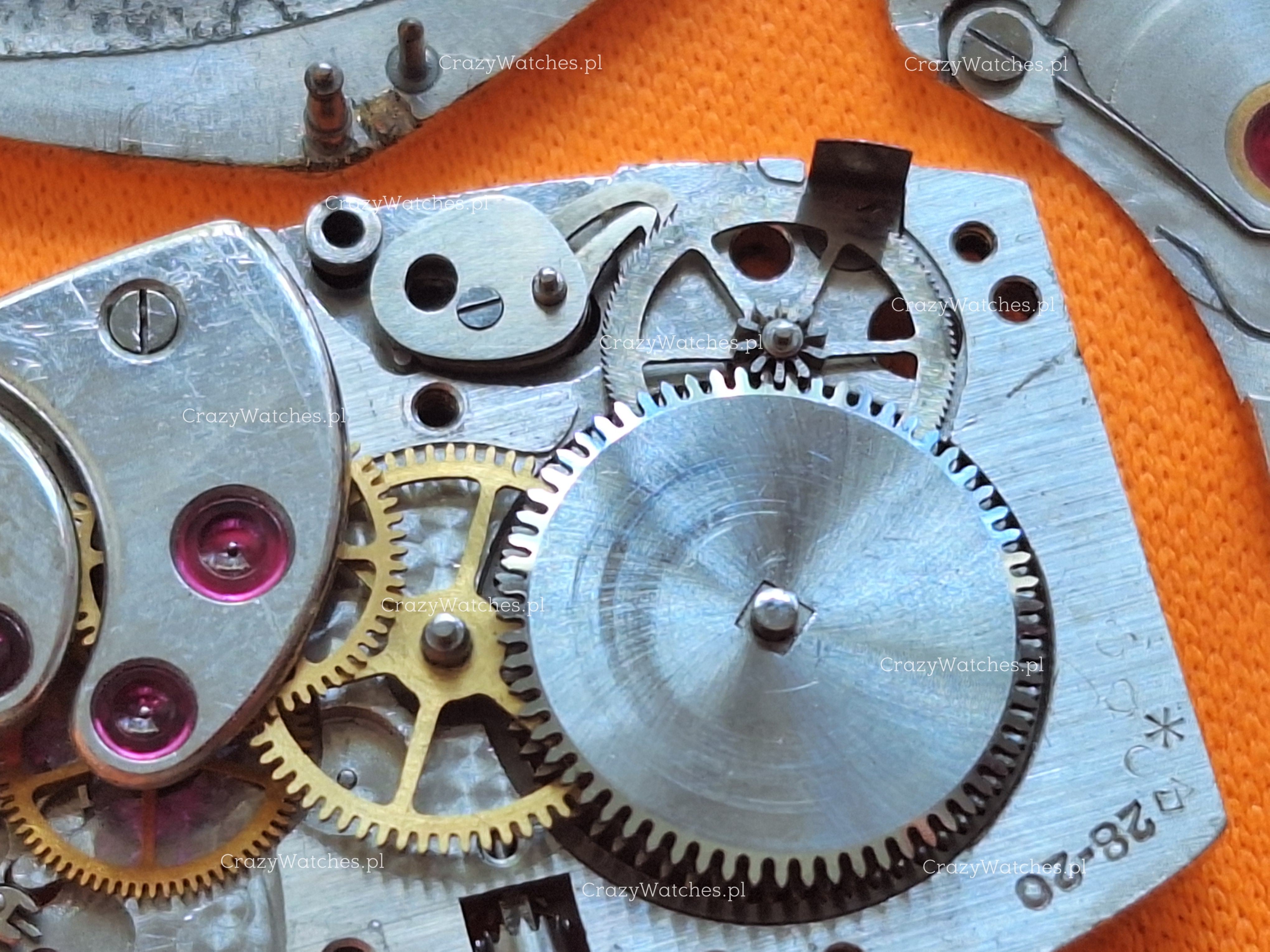
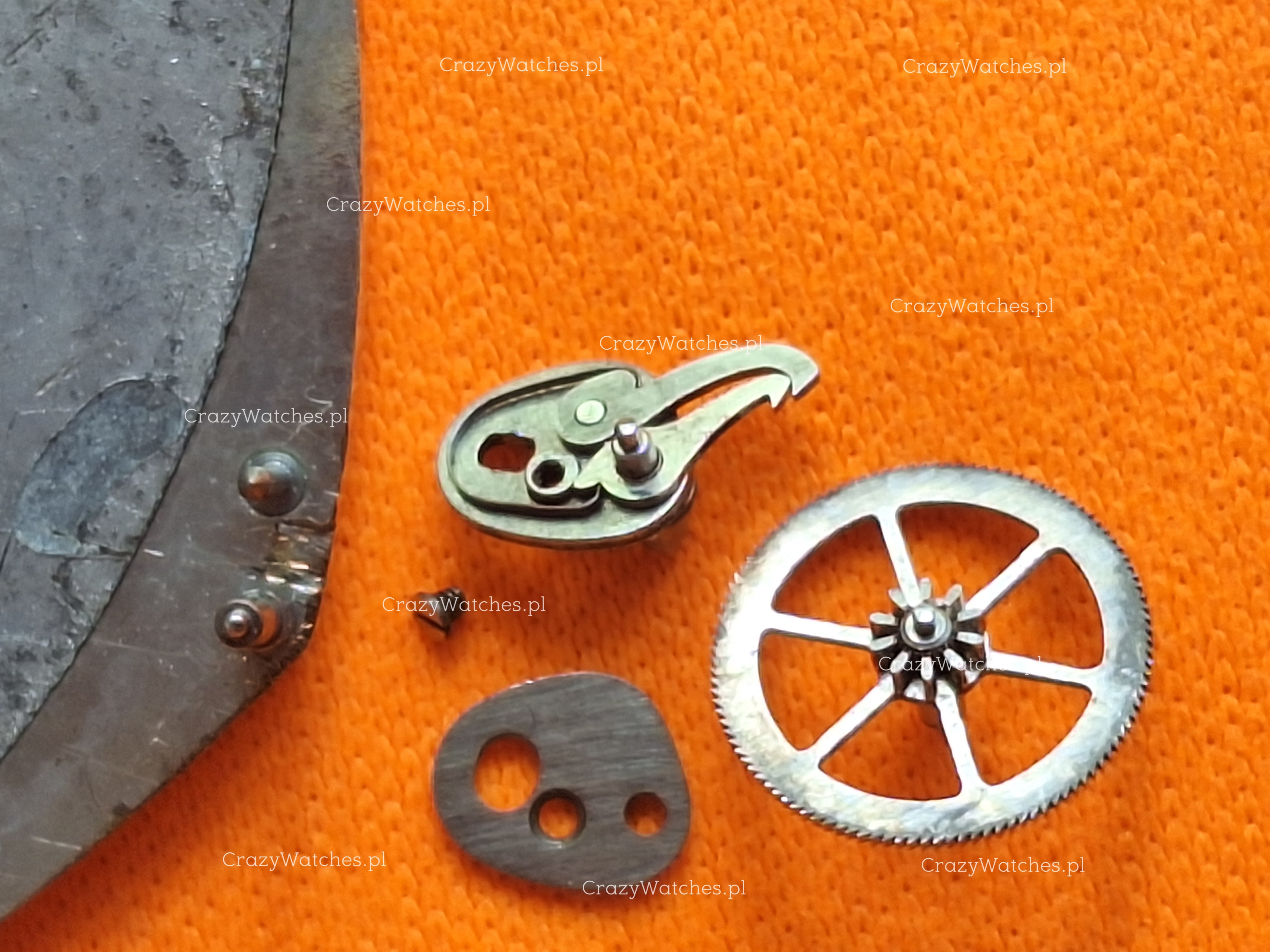
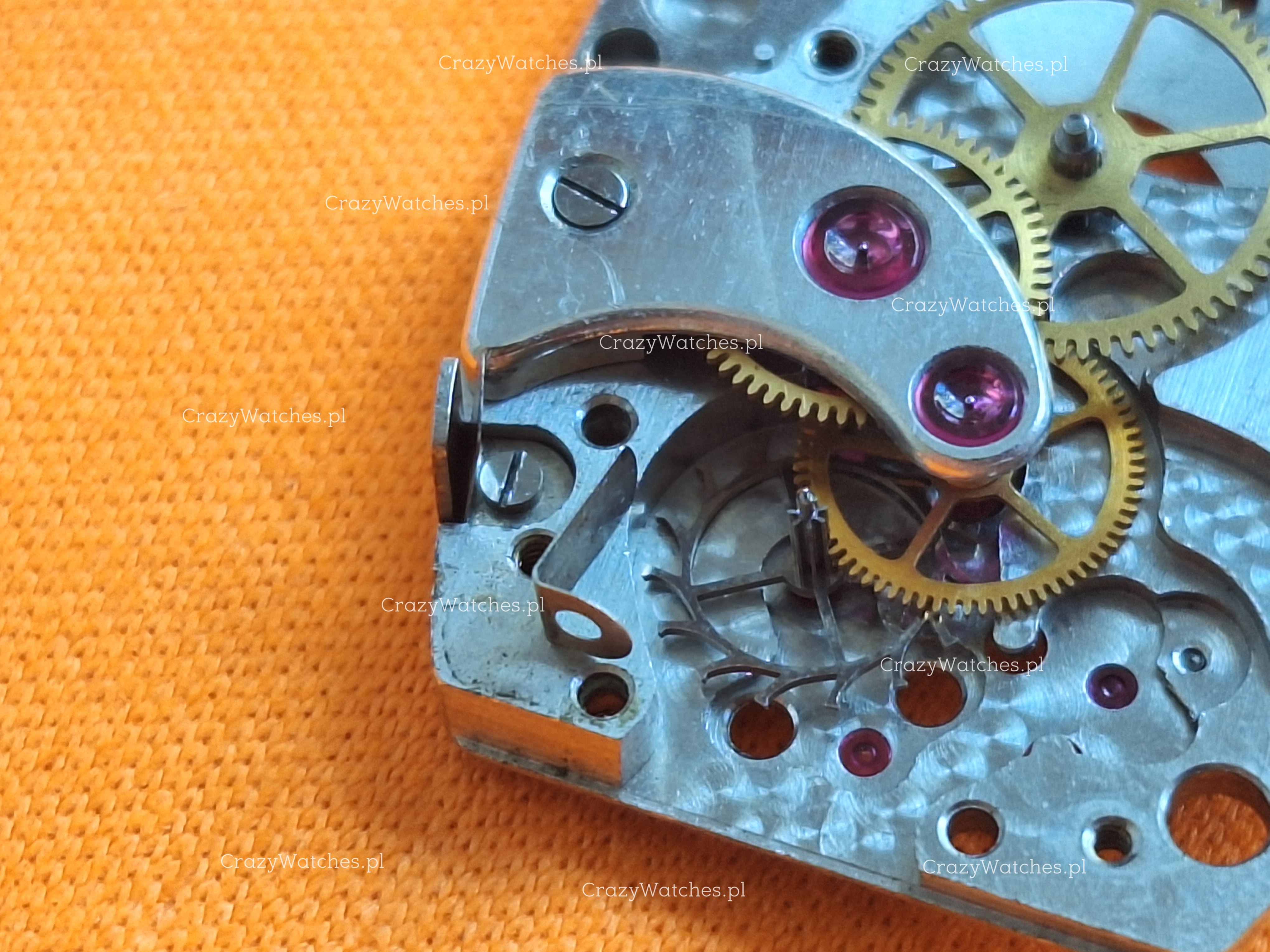
One more thing about the mainspring. It looks sound, no damage, no burs on the barrel but keeps on stopping when wound fully.
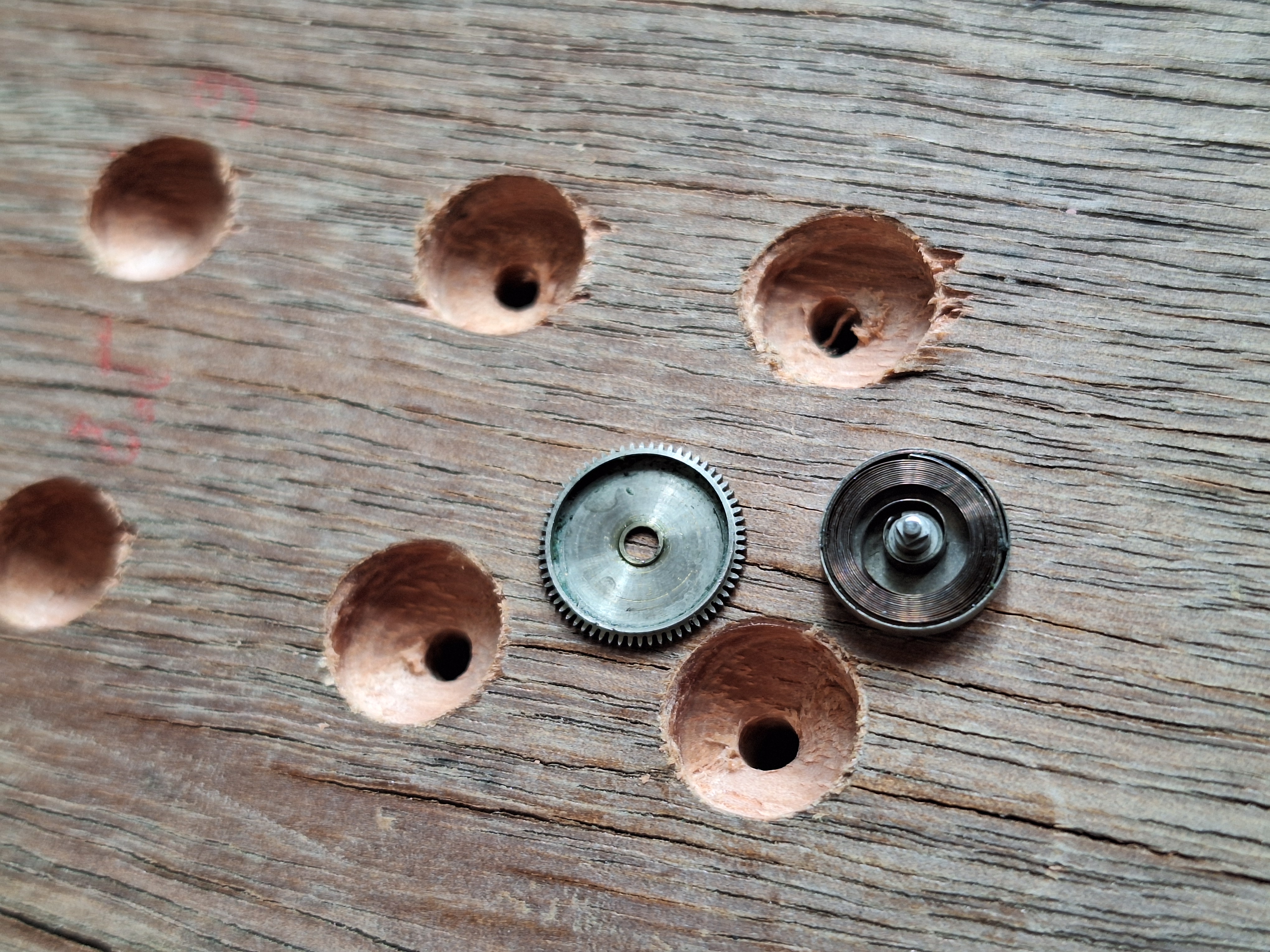
It's an unusual thick sandwich barrel that consists of two barrels where the mainspring sits in the smaller barrel which is then pressed onto the bigger barrel with teeth. There was no opening or the tiniest of space to use as leverage so I used a jig to push out one from the oother without potential damage. I had no idea how tightly they would be squeezed together but it was fairly easy to open the barrel.
The mainspring barrel is 9mm inside diameter and 1.49mm high. The mainspring is attached inside with a thicker slice of another mainspring that gives it a grip while also providing that necessary slippage for the self-winding mechanism. I found the same solution in the Pierce Linear Automatic.