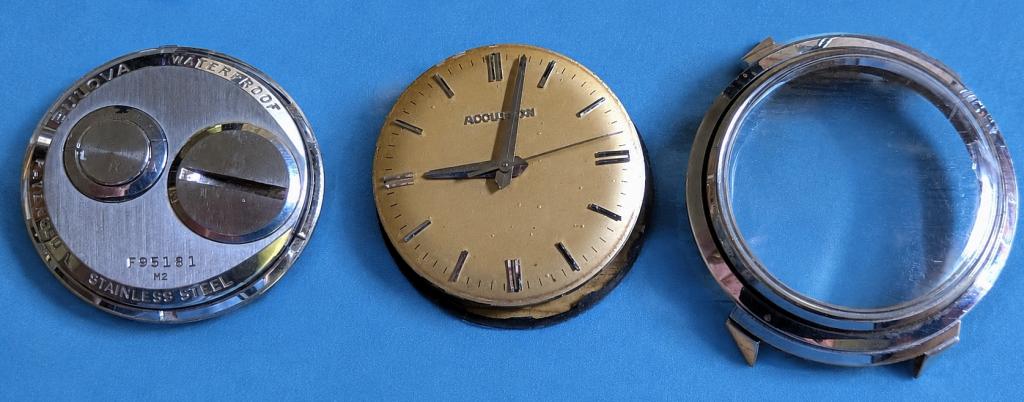
Hey all, first time posting. Always been an observer as I am still early in my collecting however rapidly growing. I wanted to bring this discussion here too since I know there's deep knowledge in this community.
Recently acquired a 114P movement (BULOVA WATCH CO. / 114P / U.S.A. / 18 JEWELS, F|S adjustment I believe at the top, teal bridges) housed in a 1962 stainless case, M2 / F9235. Posted in a Facebook Accutron group and got some great discussion going, including a theory worth sharing here: that the original prototype cases (gold/gilt) were melted down once the watches were deemed obsolete trial pieces, and a few movements were re-cased into whatever M2-era cases were available at the time? Which may explain the 1959-built movement sitting in a 1962 case. The rest of the run likely didn't survive at all.
There's also a detail from Hanson's second Accutron book that came up, the 114 used blue plastic components while the 114P used the green/teal we're all familiar with, with some differences in the battery cross-strap and electronic layout. Useful for telling the two calibers apart at a glance
My own theory, for what it's worth, the case shape on mine is very turtle-like, similar to the early Astronaut case but without the bezel, makes me wonder if the case design itself was still in testing around the same time in 61’.
There appear to be at least 2-3 of these in private hands now between various forums (one with serial 0121 in a gilt brass case, mine steel/recased and I am yet to remove the ground strap to reveal the serial). Heading to the Bulova museum this week to see what they can tell me.
Curious what this community thinks of one Facebook users melt-down/re-case theory, and whether anyone here has come across a 114 or 114P before.
Many thanks and glad to finally share in discussion with the community.
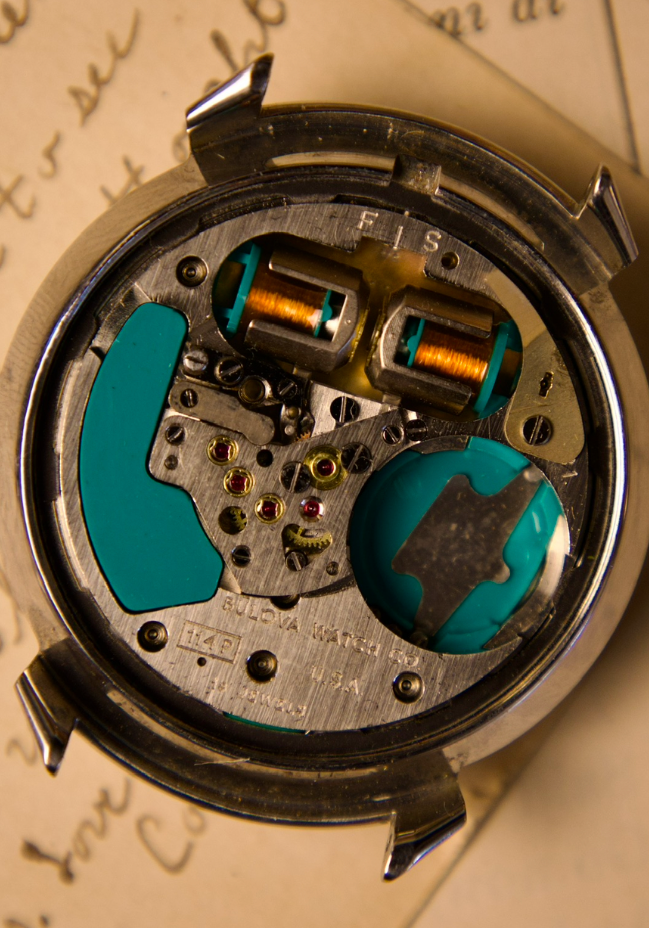
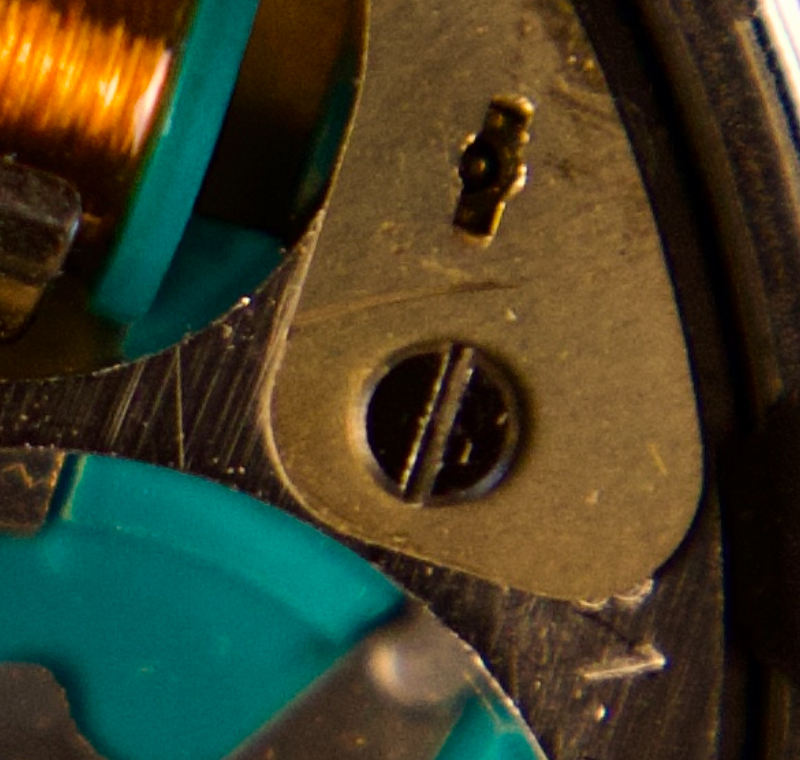
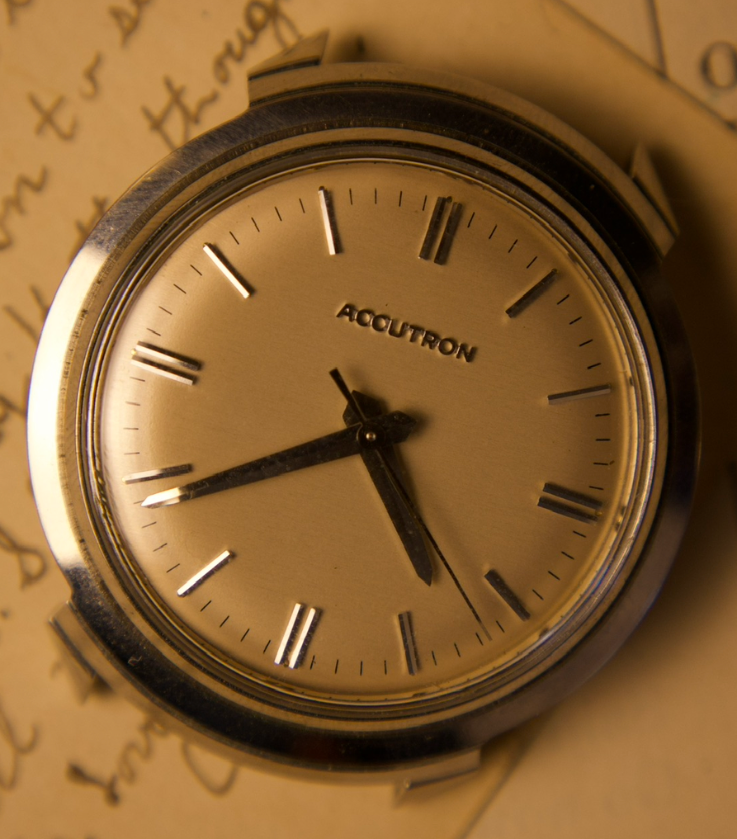
I would highly recommend anyone wanting to learn more about these early movements, buying a copy of Darold Hanson's 'Accutron Watches Book 2".
He goes into great detail about both the 114 and 114P movements and the known examples that still exist.
Complete Guide to Bulova Accutron watches Book 2 | myBulova.com
I'm actually reading the section on 114Ps as we speak.
I believe it might have been me that proposed the melt-down theory. If you think about the engineering need for the prototype, it served two important purposes (especially the 114P which was close in design to the 214 release movement) - the need for them was to:
1. Test the production of the movements. What machinery was needed, how to setup the production line, train workers, all the things needed to actually put a watch into production. You don't do that engineering on a watch in production, you do the engineering to design everything needed to put it in production (and probably also to service the eventual production models.)
2. Test the accuracy and reliability of a movement in real world conditions. You can test all you want, but putting a watch in an owners eventual environment is the real acid test of any watch. A movement might keep perfect time in a lab - and be horrendous in the field when it's exposed to temperature changes, shocks/impacts, electromagnetic fields, humidity, etc. If you want to turn out a reliable timekeeper there is no substitute for field testing, and you can't do that with just one watch, you need enough out in the world to make for a real test of the movement.
So what would Bulova do with the prototype watches? I suspect once they had ## number of hours of use in the field by trail subjects wearing them, that Bulova would want them back to see if the calibrations were stable, if they still kept good time, and then to tear them down to look for any unexpected points of wear. With the magic index wheel - nothing like that had been used before in any watch - was it going to hold up to daily wear in varying environments? I imagine that was a big concern. The rest of the watch aside from the electronics and index wheel is common watchmaking design, nothing terribly new. It would be the new designs of the watch drive that would concern the engineers and that's the reason for multiple prototype watches.
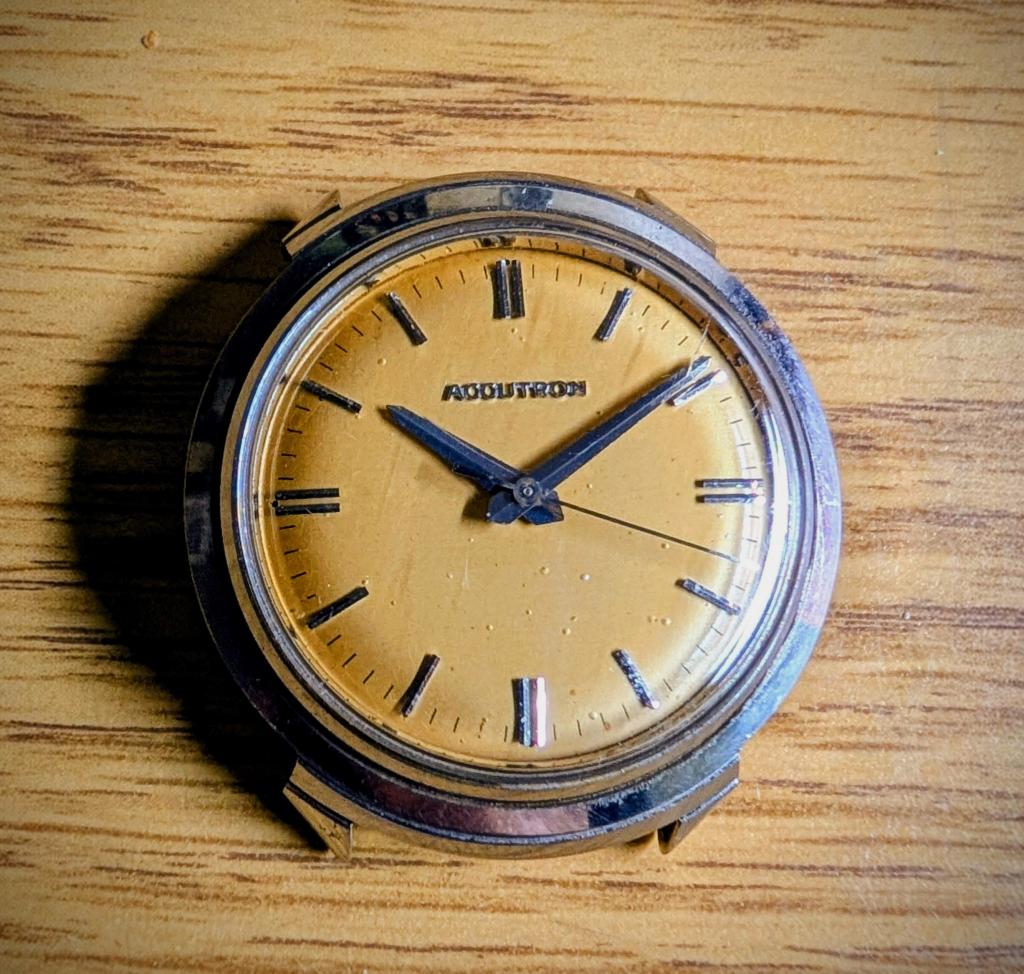
FWIW - I have no personal knowledge or inside info from anyone in Bulova who was involved with the prototype program, but I did work as an engineer for 45 years and have a reasonable knowledge of product design from invention to production, and the prototype would often make a project sink or swim. The big Accutron question - was it just a lab design or was it robust enough to put Bulova's name and money behind? Apparently it was.
I also own a 114P - the twin to the one @danielsn1227 owns - bought through the same auction houses auction of an Accutron watchmaker's estate (my guess from what was in the auction.)
Right now - mine isn't running. I haven't tried putting a battery in it because it at a very minimum should be torn down and rebuilt by a very experienced Accutron repair person before any power goes to it. That would include in-circuit testing of the electronics, especially since the coils for it are likely unobtainium and putting power to a circuit that had a short in it somewhere might damage good coils. So right now - it's sitting.
I'm considering putting it up for a trade. I'm looking for an original Astronaut (I).. if someone has one they find in excess and is interested in one of the rarest Accutron collectables - I'm open to talking. It's a case where I prefer watches I can wear, and I'd be in fear of damaging the 114P on my wrist if I was wearing in my daily rotation (about 1 unique watch per day now.. collections get out of hand..)
A few more pics:
In reply to I believe it might have been… by don_e